What you’ll learn in this post
- Simple ways to refresh your garden without overspending.
- What to grow in raised beds, containers, and small spaces.
- How to build a gardening routine that fits your life.
- Dont forget to check the offers at the end of the article…
There’s something hopeful about planting a seed when life feels ready for a fresh start. Whether last year’s garden flourished or your houseplants barely survived, the new year gives you another chance to grow something beautiful—and enjoy a little more peace along the way.
The best gardening ideas for the new year aren’t about buying everything or transforming your backyard overnight. They’re about making a few thoughtful changes that reward you with fresh flavors, colorful flowers, and a space you actually want to spend time in.
Here’s a practical approach: create one space to harvest, one space for beauty, and one habit that keeps both thriving. It’s a flexible garden refresh you can adapt to a balcony, patio, or backyard.
1. Start With a Garden Reset, Not a Shopping Spree
Before you buy new plants, take a slow walk around your growing space. Notice what worked, what struggled, and what you avoided maintaining.
Ask yourself:
- Which areas receive the most direct sunlight?
- Where does water collect after rain?
- Which plants brought the most enjoyment?
- What became more work than it was worth?
Then choose one achievable gardening goal. You might grow salad greens near the kitchen, replace a thirsty border with locally suitable plants, or turn an empty patio corner into a container garden.
Quick answer: What’s the easiest way to start a new-year garden?
Choose one manageable growing area, check its sunlight, and select a few plants suited to your climate and available time.
Small wins build confidence. An overflowing project list usually does the opposite.
2. Plan Around Your Climate, Not the Calendar
January gardening looks very different in a snowy backyard, a mild coastal garden, and a Southern Hemisphere summer.
That’s why a useful new year gardening plan begins with local conditions rather than a universal planting date.
Before planting:
- Check your typical last and first frost dates.
- Look up local sowing and transplanting recommendations.
- Note your daily sunlight and seasonal rainfall.
- Match plants to your soil, space, and watering capacity.
In the United States, the USDA Plant Hardiness Zone Map helps you assess whether perennial plants can tolerate typical winter minimum temperatures. It does not replace local vegetable planting calendars or frost-date guidance.
For region-specific advice, connect with a nearby office through the Cooperative Extension directory.
Your next step: Write down three plants you want to grow, then check whether your location and planting season suit them.
3. Create a Small Harvest Garden
Few gardening rewards feel better than picking something you grew yourself—even if it’s only a handful of herbs for dinner.
For a beginner-friendly edible garden, start with crops you already enjoy eating.
| Growing space | Plants to consider | What to check |
|---|---|---|
| Sunny windowsill | Basil, chives, parsley | Sufficient light; supplemental lighting may help |
| Patio containers | Lettuce, radishes, compact tomatoes | Suitable season, pot size, and drainage |
| Raised bed | Leafy greens, bush beans, carrots | Soil depth and crop spacing |
| Balcony | Herbs, strawberries, compact peppers | Sun, wind exposure, and safe weight limits |
These aren’t universally easy in every climate. Lettuce often performs best in cooler conditions, while basil and peppers need warmth.
For small-space gardening, grow upward where practical. A securely installed trellis can support suitable climbing crops without using much floor space.
The real advantage isn’t the size of your harvest. It’s putting fresh ingredients within easy reach.
4. Give Your Soil a Fresh Start
Healthy soil makes your gardening effort go further. Before reaching for fertilizer, find out what your growing area actually needs.
A practical soil-care checklist includes:
- Test in-ground soil before making major nutrient or pH adjustments.
- Add suitable compost where appropriate for your soil and plants.
- Avoid working wet soil, which can damage its structure.
- Keep beds covered with plants or suitable mulch where practical.
For containers, use a potting mix designed for container growing rather than filling pots with garden soil.
If you want to compost kitchen scraps and garden materials, the EPA’s guide to composting at home explains the basics.
Think of soil improvement as a long-term investment: less guesswork now can mean healthier growth later.
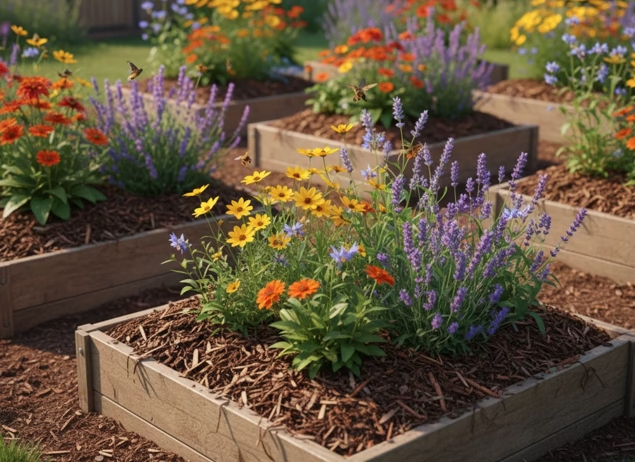
5. Add a Pollinator-Friendly Beauty Spot
A garden should feed your spirits, too. A small patch of flowers beside a path or a colorful container near your chair can make an ordinary day feel brighter.
For a pollinator-friendly garden, consider:
- Locally native flowering plants suited to the site.
- A sequence of blooms across the growing season.
- Different flower shapes that support different visitors.
- Reduced pesticide use and careful adherence to labels when treatment is necessary.
- Habitat features appropriate to your area.
Native plants aren’t automatically maintenance-free or drought-tolerant everywhere. Match each plant to your light, soil, and moisture conditions.
The Xerces Society’s pollinator conservation resources offer guidance for creating useful habitat.
Try this: Replace one underperforming plant with a locally recommended flowering species. You don’t need to redesign the whole garden to make a meaningful improvement.
6. Make Watering Easier Before Summer Arrives
One of the smartest budget-friendly gardening ideas is to reduce avoidable watering work.
Start with simple changes:
- Group plants with similar water needs.
- Check soil moisture rather than watering automatically.
- Water near the soil surface when practical.
- Use appropriate mulch, keeping it away from trunks and stems.
- Consider drip irrigation or soaker hoses for suitable beds.
Larger containers generally dry out more slowly than very small ones, although weather, plant size, and pot material also matter.
Rain barrels may be useful where permitted. Check local rules, keep systems securely covered, and follow local guidance on using collected water around edible crops.
A garden that’s easier to water is a garden you’re more likely to enjoy through the busiest weeks.
7. Build a Gardening Habit You Can Keep
Forget the pressure to become a perfect gardener. Aim to become an observant one.
A short, regular garden check can help you:
- Notice wilting or pest damage early.
- Remove a few weeds before they spread.
- Harvest crops at the right time.
- Adjust watering as conditions change.
- Record what’s working.
Keep a simple garden journal with planting dates, varieties, photos, and lessons learned. Even a few notes on your phone can prevent the same mistakes next year.
Your First-Month Garden Refresh
- Week 1: Assess your space and choose one goal.
- Week 2: Check local planting guidance and review your supplies.
- Week 3: Prepare a bed or container when conditions allow.
- Week 4: Plant season-appropriate crops—or finalize your plan if outdoor planting must wait.
Your fresh start doesn’t have to look impressive on day one. It only needs to be manageable enough to continue.
Offers and Budget-Friendly Finds to Check
Before buying supplies, look for savings that support your plan rather than distract from it:
- Local seed libraries and swaps: Ask your public library or gardening club about available seeds and participation rules.
- Community compost or mulch programs: Some municipalities offer materials free or at reduced cost; check availability and suitability.
- Garden supply promotions: Browse Gardener’s Supply Company and compare current prices, delivery charges, and product specifications.
- Seed shopping: Explore Johnny’s Selected Seeds for varieties suited to your growing conditions and available space.
Promotions and local programs vary. No specific discount or availability is guaranteed.
The best purchase is the one that helps you grow what you actually want. Start with one useful improvement, plant when conditions are right, and let your garden become a fresh start you can return to every day.
FAQs About Gardening Ideas for the New Year
What are the best gardening ideas for beginners?
Start with a small container or bed, choose a few locally suitable plants, and establish a simple watering routine. Herbs and leafy greens can be good options when light and temperature suit them.
Can I start gardening in January?
Yes, but the activities depend on your climate. You might plan beds, test soil, maintain tools, or sow appropriate crops. Start seeds indoors only when the timing matches their eventual outdoor planting date.
How can I refresh my garden on a budget?
Reuse sound containers with drainage, join seed swaps, compare seed quantities before buying, and improve one area at a time. Avoid purchasing plants before checking their space and growing requirements.
What vegetables can I grow in a small space?
Leafy greens, radishes, bush beans, and compact tomato varieties can suit small gardens. Choose crops according to season, sunlight, container depth, and spacing needs.
How do I make my garden easier to maintain?
Grow fewer plant types, group plants with similar needs, use suitable mulch, and keep frequently harvested crops close to the house. Regular short maintenance sessions can prevent bigger jobs later.
🌿 Helpful Deals & Resources
-Check out VRBO for your home away from home now for great deals: Vrbo Homes
-Do you Shop Online? use Rakuten to get cashback with your first purchase spend 50$ get $50 back via paypal or giftcards use link: Rakuten Cash Back
-Do you Shop Online? and want to compare between Rakuten and Honey (Paypal) then use use link to get $5 back on your first purchase:Honey Cash Back
–Temu (Temu Site link) 100 coupon bundle with download of app New User OnlyCoupon Bundle
-Temu (Temu Site link) US Users get 30% off for orders $39+, max deduction $25. New User Only! 30 off
–Check out Orbitz for Weekly Deals: Last Minute Hotel Deals, Flights, Vacation and Car rentals!
–Take supplements? How about 25% off? Shop Natural Made’s best sellers now and receive 25% off your first order. use link: 25 off first order
– Need a new phone Get Mobile & Internet together. $70/month on Verizon
– Looking for Wall Prints for your house checkout the latest styles here: TheVelouraPrints
The Struggles of a Lonely Entrepreneur: The truth is, entrepreneurship is as much about resilience as it is about success. These struggles are vividly captured in The Lonely Entrepreneur: How to Stay Motivated When No One Gets Your Hustle.
Qmee: The reason i like this is the pay out is as much as you have in your account. They use paypal to send you the money. If you are constant enough they add a 10% streak to your winnings. I usually look out for at least .10 cents a minute surveys. (So if the survey is 6 minutes i want at least .60 cents) The Amount of money you can make is based on your time and how many surveys you do! **No guarantee that you will get every survey** By signing up with the link below you get .50 Cents to start! Sign up on the computer only to get the reward! use link: Qmee
1Q: The ultimate favorite every single poll question that you get is .25 ! direct to paypal! No hassle no long wait just fill the question and get the money. The Amount of money you can make is based how many surveys come out and how often. Its usually about 1-2 questions a month use link: 1Q
User Interviews: User Interviews is one of the upcoming survey apps. This one is DIFFERENT then whats mentioned above. These are more focus groups that pay at least 1$/min and usually vary in length and dollar value. For example a 5 minute focus group give you 10$. **No guarantee that you will get every survey** With my code you will receive a start bonus of 10$. use link: userinterviews
McMoney: Already get thoses spam texts? Why not get paid for each one? With McMoney every so often they will send you a random text that you have to do nothing about… each text is .06 and after 6$ they send the payout to paypal. use code G3ZPZMRM for bonus start! Mcmoney
Worthy Worthy Bonds are 10$ each but they pay 5% interest a year and paid out daily. ** As like any investment their is no guarantee on investing your money, these are just some options** With my code you will receive a free bond (10$) for signing up for the app. use link: Worthy
Fundrise Ever want to invest in real estate and have no money? With Fundrise you now can! They Invest your money for you in their real estate portfolio. You can invest for as little as 10$! They pay dividends and they say the rate of return is an average of 5% ** As like any investment their is no guarantee on investing your money, these are just some options** With my code you will receive bonus shares for signing up for the app. use link: Fundrise
Robinhood: This is a user friendly trading app, where you can invest in stocks or fractions of your favorite stocks! Webull has really good technical information for trading which once you get the hang of it; it really makes a difference in your trading. ** As like any investment their is no guarantee on investing your money, these are just some options** With my code you will receive 12 fractional stocks shares for signing up for the app ( The Value is random). use link: Robinhood
Webull This is a user friendly trading app, where you can invest in stocks or fractions of your favorite stocks! Webull has a really good technical interface. It is the better app if you are about making trades using charts and signals. ** As like any investment their is no guarantee on investing your money, these are just some options** With my code you will receive 12 free stock fractional shares for signing up for the app ( The Value is random). use link: Webull