What you’ll learn in this post
- The 3-F Rule that keeps a real Christmas tree green and soft through the holidays.
- How much water a Christmas tree really drinks (it’s more than you think).
- Which popular tricks (sugar, aspirin, vodka) are myths, and what actually works.
- Don’t forget to check the offers at the end of the article…
You picked the perfect tree. It smelled like a forest when you carried it in, and the whole family stood back to admire it. Then by mid-December, every time someone walks past, needles rain onto the floor. By Christmas morning, the branches droop and the tree looks tired.
Here’s the good news: a dry, shedding tree is almost never bad luck. It’s nearly always one simple thing, and it’s easy to fix.
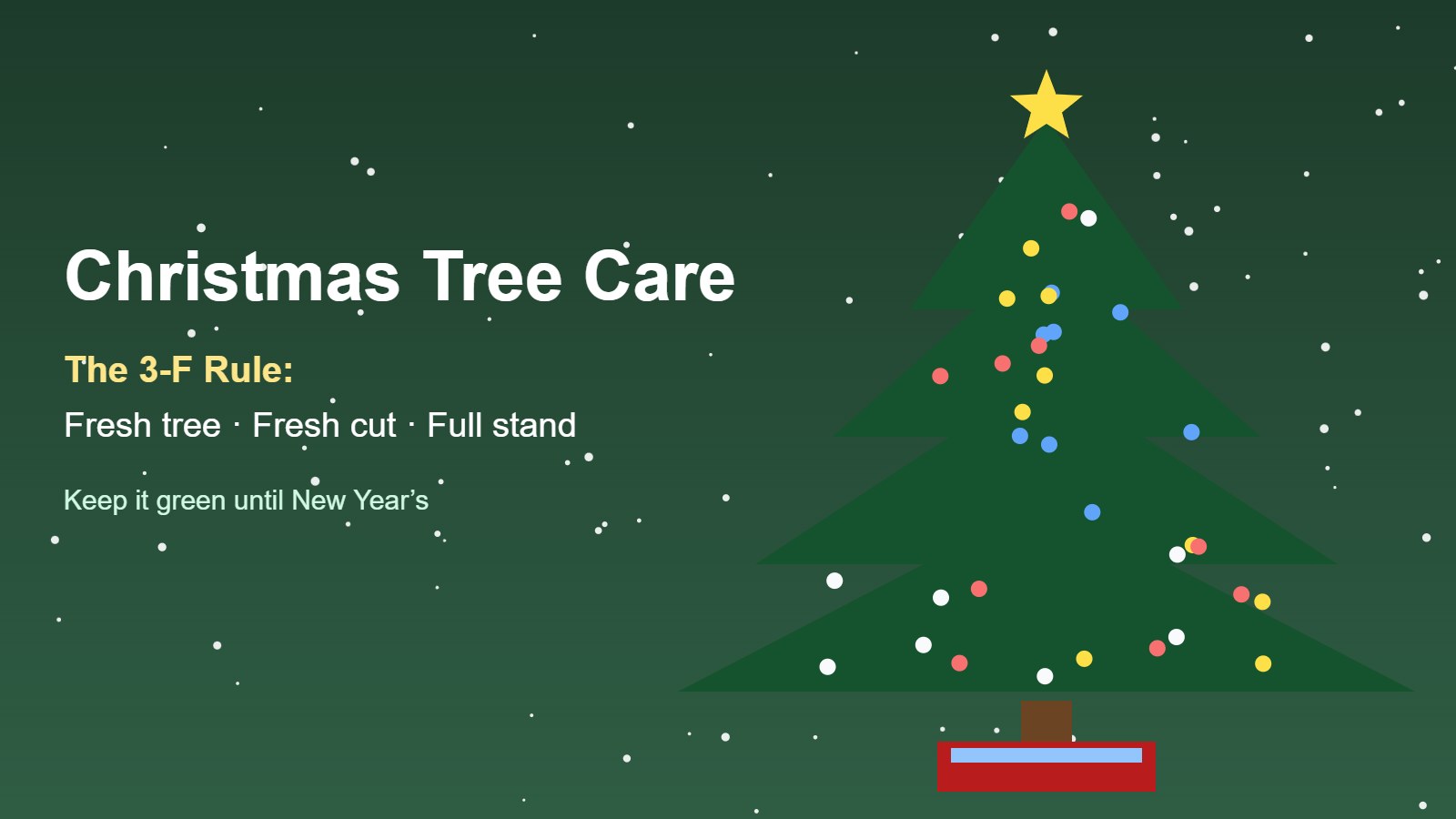
Good Christmas tree care comes down to water. A cut tree is basically a giant cut flower. Keep it drinking, and it stays green, fragrant and much safer. This guide walks you through the 3-F Rule: Fresh tree, Fresh cut, Full stand, plus the mistakes that dry trees out early.
Quick Answer: How Do You Take Care of a Real Christmas Tree?
Make a fresh cut about 1/4 to 1/2 inch off the bottom of the trunk, set it in a stand that holds at least a gallon of water right away, and never let the water drop below the base of the trunk. Check the water every day, especially the first week, and keep the tree at least 3 feet from fireplaces, heaters and vents. You don’t need any additives. Plain tap water works best.
The 3-F Rule: Fresh Tree, Fresh Cut, Full Stand
| Step | What to do | Why it matters |
|---|---|---|
| 1. Fresh tree | Choose a tree with flexible, green needles that don’t fall off when you run your hand along a branch | A tree that’s already dry won’t recover |
| 2. Fresh cut | Saw a thin disk off the trunk right before it goes in the stand | Reopens the trunk so it can drink |
| 3. Full stand | Use a big stand and keep it topped up daily | A trunk that dries out seals over and stops drinking |
Step 1: Start With a Fresh Tree
At the lot, grab a branch and pull it gently toward you. A few older, inner needles falling is normal, but green needles from the tips should stay put and bend instead of snapping. The trunk should feel slightly sticky with sap.
Not decorating right away? Michigan State University Extension recommends storing the tree in a cool, protected spot like a garage, with the cut end sitting in a bucket of water until you bring it in.
Step 2: Make a Fresh Cut
Once a tree is cut, sap starts to seal the end of the trunk, and a sealed trunk can’t absorb water well. So right before the tree goes into the stand, saw a straight disk off the bottom. You don’t need to take much. Oregon State University notes that a 1/4-inch slice is plenty for water uptake. Many lots will do this for you; just get the tree in water soon after.
One mistake to avoid: if the trunk doesn’t fit your stand, don’t shave the bark off the sides. The outer layers of the trunk are what carry water up the tree. Get a bigger stand instead.
Step 3: Keep a Full Stand (This Is the Big One)
Most dried-out trees come down to a stand that’s too small. Penn State Extension recommends a stand that holds 1 quart of water per inch of trunk diameter, which means at least 1 gallon for most trees. Measure your trunk before you buy a stand.
How Much Water Does a Christmas Tree Need?
Quick answer: About 1 quart per day for every inch of trunk diameter, and often more in the first week.
That surprises most people. According to NC State Extension, a 6-foot Fraser fir can easily use 4 quarts a day during its first 5 to 7 days, then 2 to 3 quarts a day for the following weeks. Here’s a rough guide:
| Trunk diameter | Minimum stand size | Water per day (approx.) |
|---|---|---|
| 3 inches | 3 quarts | Up to 3 quarts |
| 4 inches | 1 gallon | Up to 1 gallon |
| 6 inches | 1.5 gallons | Up to 1.5 gallons |
Tip: Check the water first thing every morning and again at night for the first week. A long-necked watering can or a funnel with a tube makes it easy to fill without crawling under the branches.
Sugar, Aspirin, Vodka? Christmas Tree Myths vs. Facts
| Myth | Fact |
|---|---|
| Add sugar, aspirin, bleach or vodka to the water | Not needed. Plain water is what keeps a tree fresh. |
| Cut 2 inches off the trunk | A thin 1/4 to 1/2 inch slice is enough. |
| If the stand runs dry, you must take the tree down and recut it | Oregon State says no. Refill it right away and keep it full from then on. |
| Any stand works if it holds the tree up | Size matters: 1 quart per inch of trunk diameter. |
Where to Put Your Christmas Tree
Heat dries a tree out fast. Pick a spot away from fireplaces, radiators, heat vents, space heaters and sunny windows. A cooler room means a tree that drinks less and holds its needles longer.
This is also about safety. Fire safety groups including the National Institute of Standards and Technology (NIST), citing the National Fire Protection Association, advise keeping the tree at least 3 feet from any heat source and checking the water daily. In NIST’s tests, a well-watered tree did not ignite under the same flame that set a dry tree ablaze.
Christmas Tree Safety Checklist
- Keep the tree at least 3 feet from fireplaces, candles, heaters and vents.
- Use lights labeled for indoor use, and replace any strands with frayed wires.
- Switch to cooler LED lights if you can.
- Turn the lights off when you leave the house or go to bed.
- Make sure the tree doesn’t block a doorway or exit.
- When the needles become brittle and snap instead of bending, it’s time to take the tree down.
How Long Does a Real Christmas Tree Last?
With steady water and a cool spot, a fresh-cut tree can last several weeks indoors. NC State Extension rates long-lasting species like Fraser fir as able to last 4 to 6 weeks under typical household conditions. If you buy right after Thanksgiving and follow the 3-F Rule, you can expect a tree that still looks good on New Year’s.
What to Do With Your Tree After Christmas
Don’t leave a dry tree in the house, garage or leaning against the house. Many towns offer curbside pickup or drop-off spots that turn trees into mulch. You can also cut the branches and lay them over perennial beds as a light winter mulch.
Give Your Tree a Drink Tonight
You don’t need special products to keep a Christmas tree beautiful. You need a fresh cut, a big enough stand and the habit of checking the water. Set a reminder on your phone for the first week, and you’ll be sweeping up far fewer needles this year.
Decorating with live plants too? See our guides to poinsettia care and Christmas cactus care, browse the best plants for the holiday season, and find the best indoor plants for cold weather.
FAQs About Christmas Tree Care
Should you put anything in Christmas tree water?
No. Plain tap water is all a cut tree needs. Sugar, aspirin, bleach and commercial preservatives don’t meaningfully help, and keeping the stand full matters far more.
Why is my Christmas tree not drinking water?
The trunk has probably sealed with sap because it sat out of water too long before going in the stand. If the tree isn’t up yet, make a fresh cut. If it’s already decorated, keep the stand full; a fresh tree will often start drinking again.
How often should I water my Christmas tree?
Check it daily and top it up so the water always covers the base of the trunk. In the first week, check morning and night.
Which Christmas tree lasts the longest?
Firs such as Fraser fir and noble fir are known for holding their needles well. Freshness and watering matter more than species, though.
Can I use warm water for my Christmas tree?
Water temperature doesn’t make much difference. What matters is that the stand never runs dry.
When is it too late to save a dry Christmas tree?
If needles fall off in handfuls and snap when bent, the tree is too dry to recover and has become a fire risk. Take it down and recycle it.