Have you ever wondered what your garden gets up to when you’re not watching? While you’re inside binge-watching your favorite shows or catching up on sleep, your garden transforms into a completely different world. Understanding the nocturnal rhythms of your garden can revolutionize how you care for your plants and create a more thriving outdoor space.
The Night Shift: Your Garden’s Hidden Workers
When darkness falls, an entirely new crew clocks in. While you might think your garden goes dormant, it’s actually bustling with activity.
Pollinators You’ve Never Met
Moths are the unsung heroes of night pollination. While bees get all the glory during the day, night-flying moths visit white and pale-colored flowers that release their strongest fragrances after dusk. If you’ve got evening primrose, moonflowers, or night-blooming jasmine, you’re running a 24-hour pollination service.
The Slug and Snail Reality Check
Here’s the truth: those holes in your hosta leaves aren’t appearing by magic. Slugs and snails emerge from hiding after sunset when the cool, moist air makes travel easier on their sensitive bodies. They can devour impressive amounts of foliage in a single night, which is why morning inspections often reveal damage that seemingly appeared overnight.
How Plants Actually “Sleep”
Plants don’t sleep the way we do, but they have circadian rhythms that would make any sleep scientist jealous.
Nyctinasty: The Official Term for Plant Sleep Movements
Many plants physically move their leaves at night. Prayer plants fold their leaves upward, mimosa plants close their leaflets, and even tomato plants droop their leaves slightly. This isn’t weakness, it’s strategy. By changing position, plants reduce water loss, protect themselves from cooler temperatures, and potentially deter certain nocturnal herbivores.
The Photosynthesis Pause That Refreshes
During daylight, your plants are in production mode, converting sunlight into energy. But at night, they switch to respiration, breaking down stored sugars to fuel growth and repair. This is when the magic of cellular repair happens, when roots push deeper into soil, and when new cells form that will become tomorrow’s growth.
Temperature Swings: Your Garden’s Nightly Workout
The temperature drop between day and night isn’t just something your plants endure, it’s something many of them need.
Why Cool Nights Matter
Many vegetables and fruits require that temperature differential to develop properly. Tomatoes, for instance, struggle to set fruit when nighttime temperatures stay above 75°F. Lettuce becomes bitter without cool nights. That temperature swing is literally baked into plant biology.
Dew Formation: Nature’s Irrigation System
When temperatures drop at night, moisture in the air condenses on plant surfaces, creating dew. In some climates, this nightly drink is so consistent that plants have evolved to rely on it. Desert plants often have specialized structures to capture and funnel dew directly to their roots.
The Underground Network Never Sleeps
While the visible parts of your garden may slow down, below ground is a different story entirely.
The Mycorrhizal Marketplace
Those beneficial fungi attached to your plant roots are operating a 24/7 trading network. They’re exchanging nutrients with your plants, communicating threats, and even sharing resources between plants. Recent research suggests this network is most active during evening and early morning hours.
Earthworms on Night Duty
Earthworms are primarily nocturnal, coming to the surface to feed and mate when the sun goes down and predators are less active. Each worm processes soil through its body, creating nutrient-rich castings that feed your plants. A healthy garden might have several worms per square foot, all working the night shift.
Practical Magic: Using Night Knowledge to Garden Better
Understanding what happens at night can transform your gardening success.
Water at Dusk, Not Dawn
Conventional wisdom says to water in the morning, but evening watering can be equally effective if done right. Water at dusk so foliage has time to dry before full darkness (preventing fungal diseases), but soil stays moist through the cool night when plants can absorb water without competition from evaporation. Your plants will drink deeply all night long.
Install Motion-Sensor Lighting Strategically
If you’re battling nocturnal pests, a motion-sensor light near vulnerable plants disrupts their feeding schedules without leaving lights on all night. Many nocturnal pests are actually deterred by sudden bright light.
Plant a Moon Garden
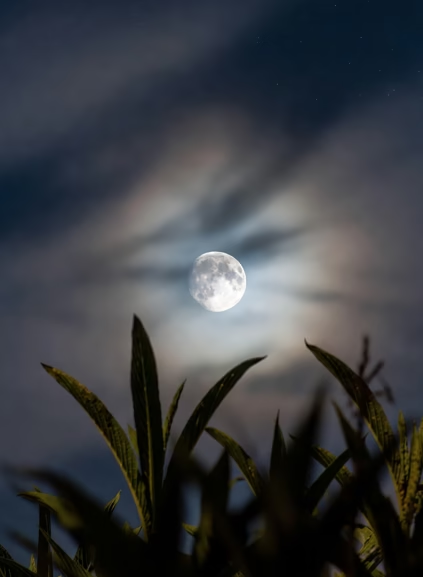
Transform your nighttime garden into a destination by choosing plants specifically for their after-dark appeal. White and silver foliage appears to glow in moonlight. Night-blooming flowers release intoxicating scents. Add some solar lighting along paths, and you’ve got an evening retreat that serves both you and your garden’s nighttime ecosystem.
Time Your Pest Patrols
Want to catch slugs and snails red-handed? Head out with a flashlight an hour after sunset. You’ll find them actively feeding, making hand removal far more effective than finding their dried trails the next morning.
The Moon’s Influence: Myth or Method?
Gardening by moon phases has been dismissed as folklore, but some of the observations have scientific backing.
The moon’s gravitational pull does affect soil moisture just as it affects tides, though on a much smaller scale. Some studies suggest seeds absorb more water during the full moon, potentially leading to better germination. Whether you plant by moon phases or not, understanding that nighttime moisture levels fluctuate is valuable knowledge.
Your Garden’s Best Time: The Golden Hours
The period just after sunset and just before sunrise, those liminal times photographers call “golden hour” and “blue hour,” are when your garden is at its most dynamic.
Temperature is shifting rapidly, dew is forming or evaporating, nocturnal and diurnal creatures are trading shifts, and plants are transitioning between their day and night metabolic states. Step outside during these times and you’ll witness your garden in flux, neither fully day nor fully night but beautifully both.
Sound in the Dark: Your Garden’s Nighttime Symphony
One of the most overlooked aspects of the nighttime garden is its soundtrack. While daytime brings birdsong and buzzing bees, nighttime offers an entirely different acoustic experience. Crickets aren’t just making noise, they’re actually using their chirps to attract mates and establish territory. The rate of their chirping is so temperature-dependent that you can estimate the temperature by counting chirps. Some gardeners swear they can hear the subtle sounds of plants drinking water after a good watering session, though this is likely the sound of soil settling and air pockets releasing.
In many regions, you might hear the calls of night-hunting owls, beneficial predators that help control rodent populations that would otherwise feast on your bulbs and root vegetables. The rustle in your hedges might be a toad, another nighttime ally that can consume thousands of insects over the growing season. These sounds aren’t just atmospheric; they’re indicators of a healthy, balanced garden ecosystem.
Frost: The Silent Night Visitor That Changes Everything
For gardeners in temperate climates, nighttime takes on critical importance as seasons shift. Frost doesn’t just happen—it’s a specific set of conditions that come together after sunset. When skies are clear, winds are calm, and temperatures drop, the earth radiates heat into space faster than it can be replaced. This radiational cooling can cause ground-level temperatures to drop below freezing even when the official temperature reading is several degrees higher.
Understanding this process can save your season. Experienced gardeners know to check weather forecasts not just for temperature, but for dew point, cloud cover, and wind conditions. A cloudy night acts like a blanket, trapping heat near the ground. A windy night keeps air mixing, preventing cold air from settling on plants. But a clear, calm night? That’s when frost protection becomes essential, even when temperatures are predicted to stay above 32°F.
The Soil Temperature Secret
While air temperature gets all the attention, soil temperature tells a different story, and it’s one that unfolds primarily at night. Soil acts as a thermal battery, storing heat during the day and releasing it slowly at night. This is why nighttime soil temperatures don’t drop as dramatically as air temperatures.
For germination and root development, soil temperature matters more than air temperature. Seeds of warm-season crops like tomatoes, peppers, and cucumbers won’t germinate if soil temperatures drop too low at night, even if daytime temperatures are perfect. This is why experienced gardeners often wait to plant until nighttime soil temperatures consistently stay above critical thresholds, 60°F for tomatoes, 70°F for melons. A simple soil thermometer checked at dawn can tell you more about planting readiness than any calendar date.
The Takeaway: Respect the Rhythm
Your garden is a 24-hour operation. The health of the daytime garden depends on what happens at night, and vice versa. By understanding and working with these natural rhythms rather than against them, you’ll create a more resilient, productive, and fascinating garden.
So tonight, maybe skip one episode of that show and step outside with a flashlight. Watch your garden’s night shift clock in. You might be surprised by what you discover.