What you’ll learn in this post
- What “gardening on/with salvia” really means and why it’s a backyard game-changer
- The best salvia types for your climate, soil, and design goals
- Step-by-step planting, care, pruning, and overwintering
- A weekend-ready backyard salvia plan (USP)
- Quick answers and FAQs to start confidently today
If you’ve ever wished your backyard felt alive—with hummingbirds zipping by, butterflies drifting from bloom to bloom, and waves of color that don’t quit—salvia might just be the joyful, low-maintenance solution you’ve been waiting for. Imagine a garden that thrives even during dry spells, smells amazing, and asks for less water, less fuss, and delivers more life. That’s the promise of gardening on salvia.
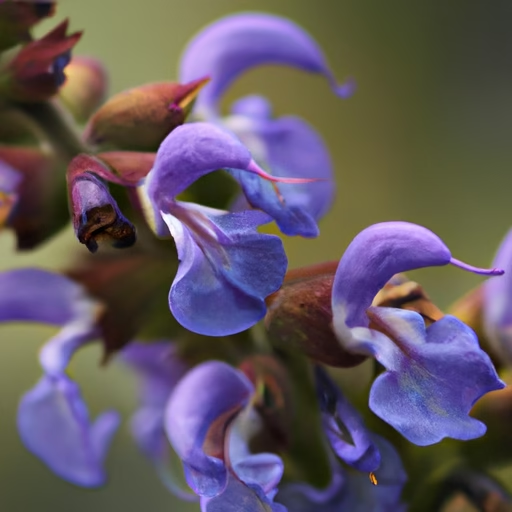
What is gardening on salvia? “Gardening on salvia” (often called gardening with salvia) means designing your backyard garden around the Salvia genus—ornamental sages loved for long bloom seasons, drought tolerance, and magnetic appeal to pollinators. Salvias are mint-family plants with showy flower spikes in blues, purples, pinks, and reds. They’re easy for beginners yet rewarding for experienced gardeners.
Important note: This post is about garden salvias (ornamental and culinary, like Salvia officinalis). It’s not about Salvia divinorum.
Why salvia belongs in your backyard
- Color that lasts: Many varieties bloom from late spring to frost.
- Drought-smart: Once established, salvias need minimal water.
- Pollinator power: Bees, butterflies, and hummingbirds adore them.
- Low effort, high payoff: Light feeding, easy pruning, minimal pests.
- Versatile styles: Cottage, Mediterranean, modern, prairie, or kitchen gardens.
The Backyard Salvia Blueprint
- Continuous color from spring to frost
- A pollinator magnet with 70% less maintenance than thirsty annual beds
- A drought-tolerant backbone that keeps your water bill in check
- A design you can scale—from a small border to a full backyard refresh
Choose the right salvia for your climate and style
Match plants to your hardiness zone first (use the USDA Plant Hardiness Zone Map: https://planthardiness.ars.usda.gov/).
- Cold-hardy (Zones 4–7): Salvia nemorosa (e.g., ‘May Night’, ‘Caradonna’), Salvia pratensis hybrids. Culinary sage (Salvia officinalis) is hardy in many cold zones.
- Warm/Hot climates (Zones 7–11): Salvia microphylla and greggii (e.g., ‘Hot Lips’), S. leucantha (Mexican bush sage), S. guaranitica (‘Black and Blue’), S. elegans (pineapple sage).
- Containers or annual color (most zones): S. farinacea (‘Victoria Blue’, ‘Mystic Spires’), many tender salvias used as annuals.
Use credible growing guides for deeper dives:
- Royal Horticultural Society Salvia Growing Guide: https://www.rhs.org.uk/plants/salvia/growing-guide
- Missouri Botanical Garden Plant Finder (search salvia): https://www.missouribotanicalgarden.org/plantfinder/plantfindersearch.aspx
Site, soil, and sun (the 3S rule)
- Sun: 6–8+ hours of direct sun. In very hot regions, a touch of afternoon shade helps.
- Soil: Well-drained is non-negotiable. Aim for loamy to sandy soil; raised beds help in heavy clay.
- pH: Neutral to slightly alkaline is ideal (about 6.5–7.5).
- Water: Keep evenly moist the first season; then water deeply but infrequently.
Backyard Salvia Blueprint: A weekend plan
1) Map your light
- Note where you get 6–8 hours of sun. That’s your salvia lane.
2) Prep the soil
- Loosen the top 8–12 inches.
- Mix in 2–3 inches of compost for structure and drainage.
- If you have clay, add coarse sand or fine gravel and consider raised beds.
3) Pick your mix (thrillers, fillers, spillers)
- Thrillers (height/accent): S. guaranitica ‘Black and Blue’ (Zones 8–10; annual elsewhere), S. leucantha (Zones 8–11).
- Fillers (mounding, long bloom): S. nemorosa ‘Caradonna’ or ‘May Night’ (Zones 4–8), S. greggii/ microphylla (Zones 7–10).
- Spillers (edge/containers): S. farinacea ‘Victoria Blue’ or ‘Mystic Spires’ as annuals in cooler zones.
- Culinary corner: Salvia officinalis (common sage) near your kitchen path.
4) Plant with purpose
- Spacing: 12–18 in. for compact varieties; 24–36 in. for larger shrubs.
- Depth: Plant at the same depth as the nursery pot; don’t bury the crown.
- Water in deeply after planting.
5) Mulch smart
- 2 inches of mulch to retain moisture and stop weeds, keeping mulch 2 inches off stems.
6) Set it and forget it care
- Water weekly (deep) for the first season, then as needed.
- Feed lightly in spring with a balanced, slow-release fertilizer or compost.
- Deadhead and lightly shear after each bloom flush to encourage rebloom.
Design combos that just work
- Pollinator drift: S. nemorosa + echinacea + yarrow + ornamental grasses.
- Hummingbird magnet: S. guaranitica + S. greggii ‘Hot Lips’ + agastache.
- Mediterranean vibe: Salvia officinalis + lavender + rosemary + thyme.
- Cottage border: S. nemorosa + roses + catmint + alliums.
Quick answers: care, pruning, and water
- Water: Deeply once a week in the first growing season; then reduce to every 10–14 days (adjust for heat/rain).
- Fertilizer: Minimal. Overfeeding = fewer flowers, more leaves.
- Pruning: Deadhead spent spikes. After a major flush, shear the plant back by about one-third. In cold areas, wait until spring to cut back woody salvias.
- Overwintering: In Zones 4–6, add 2–3 inches of mulch after the ground cools; don’t cut back to the crown in fall.
Pests and problems (mostly easy)
- Common pests: Aphids, whiteflies, spider mites in hot, dry spells. Manage with a strong water spray or insecticidal soap. UC IPM has salvia guidance: https://ipm.ucanr.edu/PMG/GARDEN/PLANTS/salvia.html
- Disease: Powdery mildew in shade or poor air flow; space correctly and avoid overhead watering.
- Wildlife: Generally deer-resistant; rabbits may nibble new growth.
Propagation shortcuts
- Cuttings: Softwood cuttings in late spring/early summer root easily.
- Division: Clumping types like S. nemorosa can be divided in early spring.
- Seed: Many annual salvias start cleanly from seed indoors 6–8 weeks before last frost.
Backyard wins you’ll feel this season
- Instant pollinator action: Pair multiple salvia colors for constant nectar.
- Less water, more flower: Switch a thirsty annual bed to salvia anchors.
- Kid-friendly nature moments: Salvia + hummingbirds = backyard magic.
- Herb and beauty in one: Grow culinary sage for the kitchen and floriferous salvias for the show.
Responsible choices and safety notes
- Edible leaves: Only culinary sage (Salvia officinalis) is typically eaten. Ornamental salvias are not for consumption.
- Pets: Salvias are generally considered non-toxic but always check specific varieties and monitor curious chewers.
This Ruby Supreme Guava Tree (Height: 2 – 3 FT) is available for your house! Dont like? ENJOY $20 OFF of $150 or more Use Code: 20YD150

Action step: Start your salvia garden this weekend
- Confirm your zone: USDA Zone Map (https://planthardiness.ars.usda.gov/)
- Pick 3 varieties (one tall, two mid/compact) suited to your zone.
- Prep one 4×8 bed or a 15–24-inch container trio.
- Plant, mulch, water in, and invite the pollinators. For region-specific plant lists: Pollinator Partnership Guides (https://www.pollinator.org/guides) and Xerces Pollinator Conservation (https://xerces.org/pollinator-conservation).
FAQs
Q: What does “gardening on salvia” mean? A: Building your garden design around salvia (ornamental sages), using them as focal points, fillers, and pollinator anchors for a low-maintenance, high-impact landscape.
Q: When should I plant salvia? A: Plant in spring after danger of frost. In warm climates, fall planting works well so roots establish before heat.
Q: Does salvia come back every year? A: Many do. Cold-hardy perennials like S. nemorosa return in Zones 4–8. Tender salvias (e.g., S. guaranitica, S. leucantha) are perennial in warmer zones and grown as annuals elsewhere.
Q: How much sun does salvia need? A: Aim for 6–8 hours daily. In extreme heat, light afternoon shade can help.
Q: How often should I water salvia? A: First season: weekly deep watering. Established: every 10–14 days in average weather. Containers need more frequent watering.
Q: Is salvia deer-resistant? A: Generally yes, thanks to aromatic foliage. No plant is deer-proof; pressure varies.
Q: Do I need to deadhead? A: Yes, removing spent spikes encourages repeat bloom. Shear by about one-third after a large flush.
Q: Can I grow salvia in pots? A: Absolutely. Choose compact varieties like ‘Mystic Spires’ or ‘Victoria Blue’ and use a gritty, well-draining mix.
Q: How do I attract hummingbirds? A: Plant tubular, nectar-rich salvias in red, pink, or deep blue (e.g., S. guaranitica, S. greggii) in clumps for visibility.