What you’ll learn in this post
- What guerrilla gardening is (and why it’s so powerful)
- How to apply guerrilla gardening ideas to your own garden
- The best plants, tools, and simple “stealth” techniques for quick success
- Smart, low-risk tips to keep your guerrilla garden thriving
- FAQs beginners ask before they start
Guerrilla gardening isn’t just about planting—it’s about taking back dull, lifeless spaces and turning them into something that makes you feel proud every time you walk past. If you’ve ever looked at a bare patch of soil, a sad corner of your yard, or an unloved strip by a fence and thought, “This could be beautiful,” you’re already halfway there.
What is guerrilla gardening?
Guerrilla gardening is the act of planting (usually flowers, herbs, or vegetables) in neglected or underused spaces to improve beauty, biodiversity, and community well-being. Traditionally, it’s associated with planting in public or abandoned areas—but you can absolutely use the same creative, fast-impact approach in your own garden.
Think of it as high-impact gardening with a rebellious, resourceful spirit: minimal cost, maximum transformation.
To understand how the movement began and why it matters, you can explore the background at Wikipedia’s guerrilla gardening entry : https://en.wikipedia.org/wiki/Guerrilla_gardening
Why guerrilla gardening works so well at home
Most people garden “by the rules”: plan everything, buy everything, wait for perfection. Guerrilla gardening flips that.
It focuses on:
- Speed: quick wins that keep you motivated
- Resilience: hardy plants that thrive with less fuss
- Creative planting: using overlooked spots to create surprising beauty
- Pollinator support: more flowers, more bees, more life
If you want a garden that looks better in weeks (not seasons), guerrilla methods are made for you.
The USP: The fastest way to upgrade your garden—without a full redesign
Here’s the unique selling proposition of applying guerrilla gardening to your garden:
You can dramatically transform your garden using low-cost, low-effort planting tactics—without ripping everything out, hiring help, or starting from scratch.
This approach is perfect if you want results now, you’re working with a tight budget, or you’ve got “problem areas” you don’t know how to fix.
Quick answer: How do I apply guerrilla gardening to my garden?
Use these four principles:
- Target neglected zones (bare soil, shady corners, fence lines, spots you avoid)
- Choose hardy, fast-growing plants
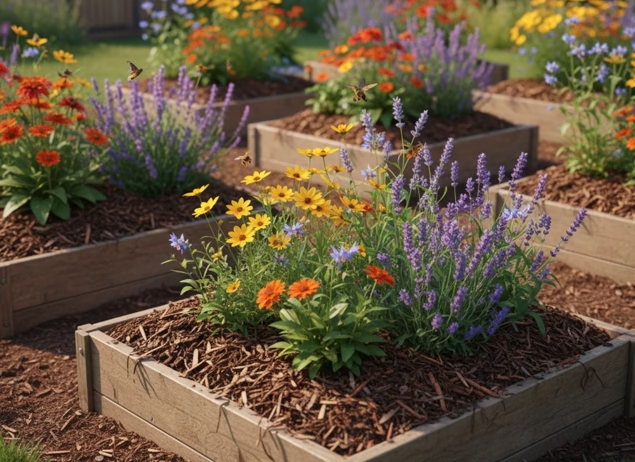
- Plant in clusters for instant impact
- Use low-maintenance methods (mulch, ground covers, drought-tolerant choices)
Step-by-step: Guerrilla gardening tactics you can use today
1) Find your “forgotten” garden spaces
Walk your yard and mark areas that feel empty or messy:
- Along fences and walls
- Around bins or sheds
- Near the driveway edge
- Under trees (if there’s partial light)
- The strip between patio and lawn
These are ideal for guerrilla-style planting because any improvement feels dramatic.
2) Choose plants that forgive mistakes (and still look amazing)
The best guerrilla gardening plants are tough, quick, and generous.
Fast, easy flowers (pollinator-friendly):
- Calendula
- Nasturtiums
- Sunflowers (dwarf varieties work well in small spaces)
- Cornflowers
- Cosmos
Herbs that spread happily:
- Thyme (great ground cover)
- Chives
- Oregano (best in contained areas)
- Mint (only in pots—mint is a takeover artist)
Low-maintenance ground cover options:
- Creeping thyme
- Sedum (great for dry spots)
- Ajuga (for partial shade)
Want a solid guide to pollinator-friendly planting? The Xerces Society has excellent resources : https://xerces.org/pollinator-conservation
3) Use “instant impact” planting patterns
Guerrilla gardening isn’t about single plants sprinkled everywhere. It’s about bold patches.
Try these:
- Rule of 3s: plant in groups of 3, 5, or 7
- Color blocks: one strong color per patch (yellow calendula, orange nasturtium, etc.)
- Layering: tall in back, medium in middle, ground cover in front
This makes small changes look like a real design—fast.
4) Try seed bombs (even in your own garden)
Seed bombs are a classic guerrilla gardening technique: seeds mixed with compost/clay so they’re easy to “drop and grow.”
In your garden, they’re useful for:
- Filling bare soil quickly
- Planting hard-to-reach corners
- Creating spontaneous wildflower patches
Tip: Use native wildflower mixes where possible—your local ecosystem will thank you.
5) Go low-water, low-effort (so you don’t burn out)
The secret to guerrilla gardening success at home is sustainability—your time and energy matter.
Make it easier:
- Add mulch after planting to hold moisture
- Pick drought-tolerant plants for sunny edges
- Install a simple soaker hose for “set and forget” watering
This Sunburst Tangerine Tree is available for your house! Dont like? ENJOY $20 OFF of $150 or more Use Code: 20YD150

Guerrilla gardening ideas by garden type (quick list)
If you have a small garden
- Plant vertical climbers (trellis + sweet peas)
- Use pots in “dead zones” near doors or steps
- Create a mini wildflower strip along a wall
If you have a messy or patchy lawn
- Convert a corner into a wildflower pocket meadow
- Plant a border of tough perennials to “frame” the space
- Add a path edge with thyme or sedum
If you have shade
- Focus on foliage texture (ferns, hostas where suitable)
- Add shade-tolerant ground covers
- Use containers to control soil quality
Common mistakes to avoid (so your garden doesn’t turn into chaos)
- Planting invasive species (they’ll spread aggressively)
- Ignoring sunlight (sun plants in shade = disappointment)
- Overmixing colors (it can look accidental instead of intentional)
- Skipping mulch (bare soil dries out and weeds move in fast)
A simple 7-day guerrilla gardening plan (doable and motivating)
- Day 1: Identify 2–3 neglected spots
- Day 2: Choose hardy plants/seeds for each spot
- Day 3: Clear debris and loosen soil
- Day 4: Plant in clusters
- Day 5: Water deeply + mulch
- Day 6: Add one “wow” element (sunflowers, a pot, a trellis)
- Day 7: Take a photo—track the transformation
This keeps you moving while your garden rewards you quickly.
FAQs about guerrilla gardening (and using it in your garden)
What is guerrilla gardening in simple terms?
It’s planting in neglected spaces to make them greener, prettier, and more alive—often with fast, low-cost methods.
Is guerrilla gardening legal?
In public spaces it can be legally tricky depending on local rules and property ownership. But in your own garden, it’s completely legal—you’re simply using guerrilla-style techniques.
What are the best plants for guerrilla gardening beginners?
Calendula, nasturtiums, cosmos, sunflowers (dwarf), thyme, chives, and native wildflower mixes are great beginner-friendly choices.
Can guerrilla gardening work in a neat, modern garden?
Yes. Use the same methods—clusters, bold patches, fast fillers—but choose a controlled color palette (like whites and purples) for a clean look.
How do I keep guerrilla gardening from looking messy?
Use clear edges (borders, stones, a mown strip), plant in groups, and repeat the same plants in multiple places for a “designed” effect.
Do seed bombs actually work?
They can—especially in prepared soil with some moisture. They’re most effective when you choose suitable seeds and don’t rely on them for precision planting.